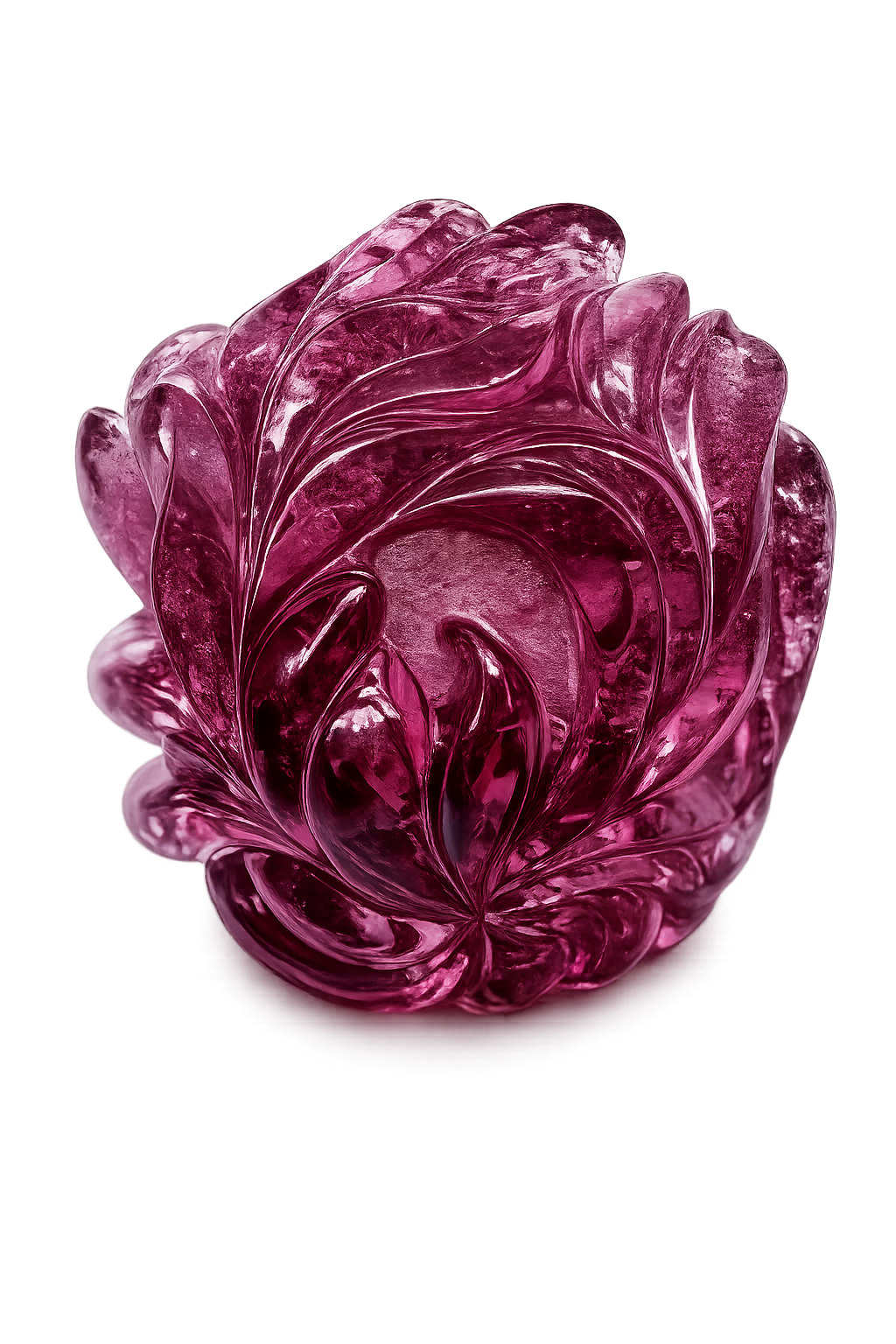
Kuh-i-Lal, Pamir Mountains
The Pamir Rose
In our keeping: 285 carats of natural, untreated Kuh-i-Lal spinel – the kind a thousand years mistook for ruby.
The source
Mountain of the Spinel
There is exactly one place responsible for the greatest red and pink spinels ever set into a crown. It sits high on a cliff above the Panj River, on the border between Tajikistan and Afghanistan, in the Pamir Mountains – a mine the locals called Kuh-i-Lal, “Mountain of the Spinel.”
For centuries no one told spinel from ruby by science – only by intuition and awe – so these stones travelled the world as “balas rubies,” after Badakhshan, the old name for the region around the mine.
The largest documented spinels from Kuh-i-Lal
Fourth by Weight
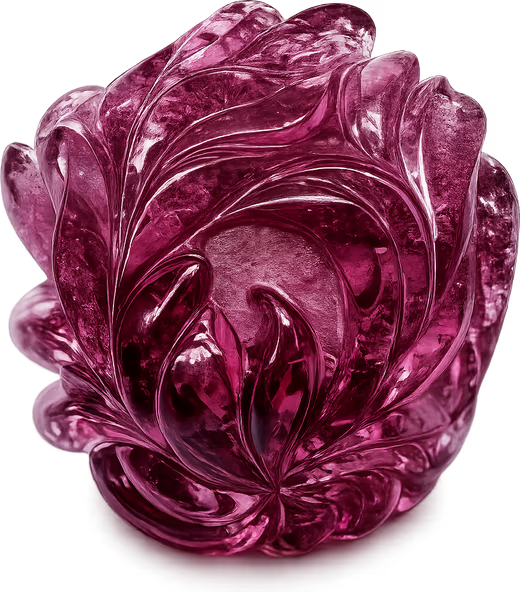
285.15 ct
Number 4 by weight: The Pamir Rose
Marianovich family collection
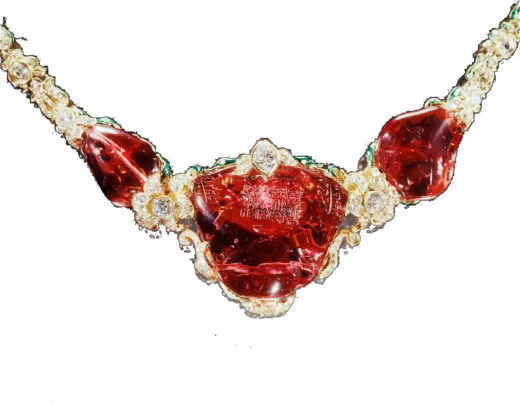
352.5 ct
Number 3 by weight: The Timur Ruby
British Royal Collection
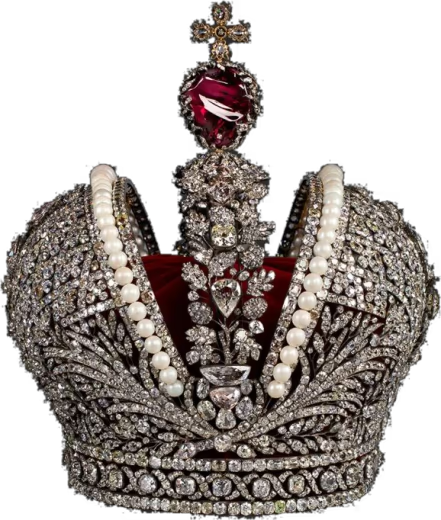
398.72 ct
Number 2 by weight: The Great Imperial Crown spinel
Russian Diamond Fund
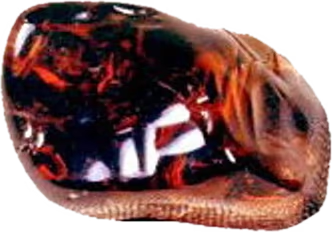
≈ 500 ct
Number 1 by weight: The Samarian Spinel
Iranian Crown Jewels
The Samarian Spinel among the Iranian Crown Jewels; the great red stone crowning the Great Imperial Crown made for Catherine the Great’s coronation; the Timur Ruby, inscribed with the names of the Mughal emperors who once possessed it. Then the Pamir Rose.
The stone
A Carving, Not a Facet
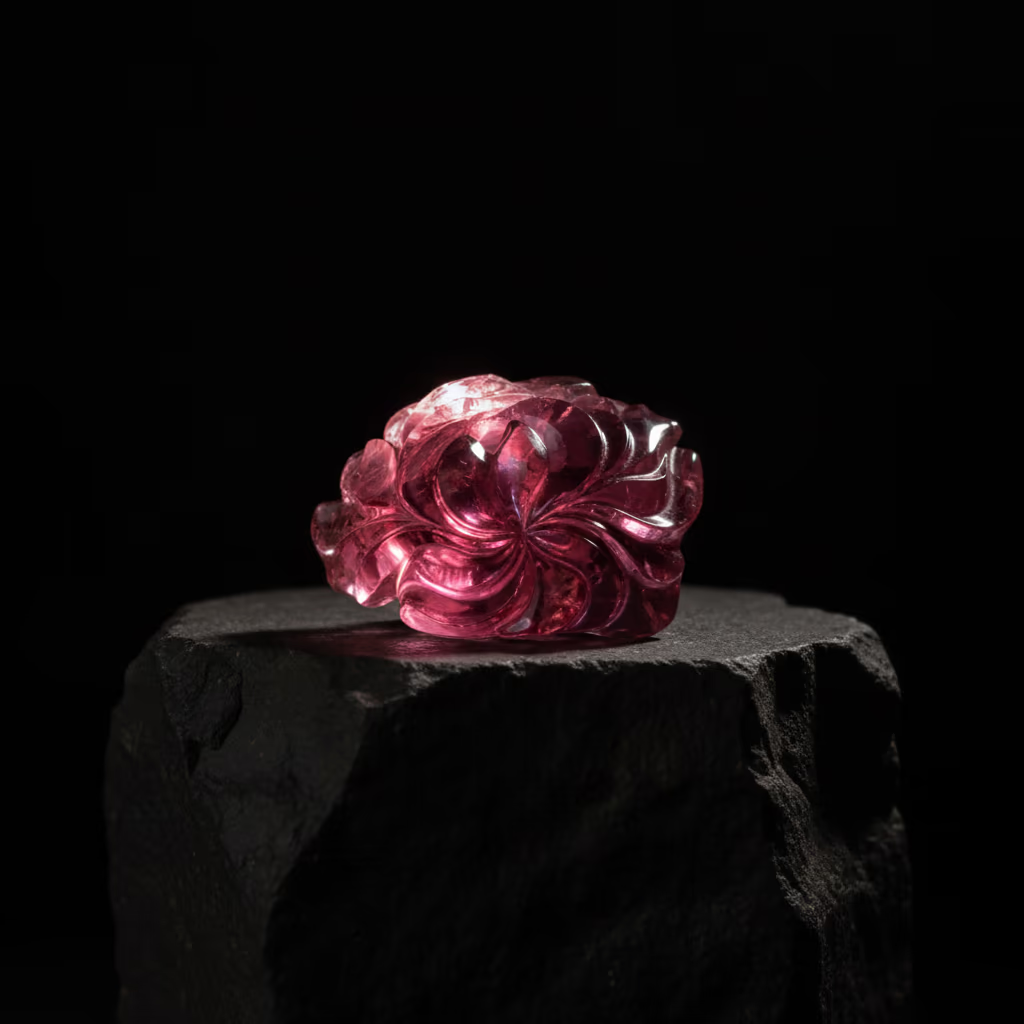
At just over 285 carats, this is not a faceted gem. It’s a fancy carving – a swirling, leaf-and-flower composition cut directly into the body of the rough, the kind of work that can only be attempted on a stone large and clean enough to survive it. At its heart lies a completely transparent, jewelry-grade core of pink spinel.
Details
The Pamir Rose
Provenance
Centuries of Private Hands
We believe the Pamir Rose is genuinely old – likely cut from rough mined around five hundred years ago, in the same era that produced the other great Kuh-i-Lal specimens. This is our own estimation based on the material and its style of carving, not a documented fact, and we state it as such.
For generations it moved privately, from one collection to the next – never publicly offered, never broken up, never heated. Two independent laboratories confirm it natural and untreated. It is now part of our family’s collection.
The Right Home
We are not in a hurry to sell it. A stone like this deserves the right home – a serious private collector, a museum, or an auction house prepared to place it alongside the handful of great Kuh-i-Lal spinels the world already knows by name.